
Introduction
One day, the lawn looks thick and green, and the next, it seems like crabgrass, chickweed, and little patches of annual bluegrass have popped up everywhere. Many North Atlanta and Alpharetta, Georgia, homeowners have watched weeds take over almost overnight, wondering what went wrong after mowing, watering, and fertilizing on schedule.
The missing piece is usually pre-emergent weed control. Most people reach for weed killers only after they see the problem. By that point, the weeds are already stealing water, sunlight, and nutrients from the turf. Pre-emergent herbicides flip that script by stopping many weed seeds before they ever break through the soil.
Think of a pre-emergent treatment as a protective shield across the top inch or two of your yard. When weed seeds try to sprout, they hit that barrier, absorb the herbicide, and fail before they become visible plants. The catch is that this shield only works when it goes down at the right time, and that window in the Alpharetta and North Atlanta area is very specific.
Champion Outdoor Services has spent more than 30 years caring for turf and plant health on homes and estates across this region. By reading this guide, property owners will see:
what pre-emergent does,
why timing matters so much in Georgia,
which weeds it targets, and
why professional application gives far better results than guesswork with a store-bought product.
“The best time to control a weed is before it ever appears.”
— Common turfgrass principle
Key Takeaways
Pre-emergent herbicides stop weed seeds before they grow. They must be applied before weeds are visible on the lawn. When this barrier is timed correctly, it can prevent an entire season’s worth of weeds, saving hours of pulling and spraying later. Because of this, timing is the single most important factor in how well a pre-emergent program works.
North Atlanta has a narrow spring application window. In Alpharetta and the rest of North Atlanta, the main spring pre-emergent window usually lands between late February and mid-April, while soil temperatures are still below about 55 degrees in the top couple of inches. Hitting this window is what keeps summer annual weeds like crabgrass, goosegrass, and ragweed from ever getting started. Champion Outdoor Services closely watches local conditions so this step happens at the correct moment for each property.
Fall pre-emergent is just as important. A second key window falls in early fall, generally September through November, as soil temperatures cool back down toward 70 degrees. This is when pre-emergent treatments stop winter weeds such as chickweed, henbit, and annual bluegrass that would otherwise show up in thin spots all winter and spring. Skipping this fall application leaves many Georgia lawns full of cool-season invaders.
Watering-in is what activates most products. Every pre-emergent product needs proper activation, which means watering it into the soil so the herbicide moves off the grass blades and into the top layer of soil. Without that watering step, the barrier never forms and the lawn receives almost no protection. Professional lawn services manage this activation step carefully so the protection is even across the yard.
Professionals bring experience, safety, and planning. A professional team like Champion Outdoor Services brings more than just products to the table. They match the right pre-emergent to each grass type, apply it evenly with calibrated equipment, follow safe practices with all lawn chemicals, and pair prevention with post-emergent weed control, mosquito control, and long-term plant care for healthier, more enjoyable outdoor spaces.
What Is A Pre-Emergent Herbicide (And How Does It Actually Work)?
A pre-emergent herbicide is a type of lawn chemical that goes down before weeds appear and forms a protective layer in the top one to two inches of soil. When weed seeds begin to germinate, their tiny new roots move through that treated soil and take in the herbicide. This stops normal cell division in the root tip, so the new plant never develops a working root system.
Because the seedling cannot pull in water or nutrients, it dies below the surface before it ever shows as a green plant. To a homeowner, that weed simply never appears. This is very different from a post-emergent product, which must be sprayed or spread on weeds that are already growing and depends on contact with leaves and stems.
It is also important to understand what pre-emergent does not do:
It does not kill existing weeds at any stage you can see above the soil; those must be handled with post-emergent herbicides or manual removal.
It does not “know” the difference between a weed seed and desirable grass or flower seed. If pre-emergent is present in the soil when you try to overseed your yard or direct-seed a flower bed, it will usually block those seeds as well.
A simple way to picture it is as a clear force field on top of your yard. The soil underneath is still alive and active, and your established grass and shrubs can grow right through it. However, any germinating weed seeds that try to push up through that barrier hit the herbicide layer and fail before they can compete with your turf.
A complete weed management program uses pre-emergent for broad prevention and post-emergent for any weeds that manage to slip through. Champion Outdoor Services combines both approaches so lawns stay cleaner through the whole growing season instead of bouncing from one weed flare-up to the next.
Feature | Pre-Emergent Herbicide | Post-Emergent Herbicide |
|---|---|---|
When It Is Applied | Before weeds emerge from the soil | After weeds are visible and growing |
How It Works | Forms a barrier that stops new seeds from building roots | Moves through leaves and stems to kill existing plants |
Best Use | Seasonal prevention and long-term weed reduction | Spot treatment and cleanup of breakthrough weeds |
Because pre-emergent products work underground, their success depends heavily on correct timing and activation, which leads directly into the next section.
“Pre-emergent herbicides are only as good as their timing.”
— Common extension-agronomy guidance
Timing Is Everything – When To Apply Pre-Emergent In Georgia
Weed seeds react to temperature much more reliably than they react to calendar dates. In the Alpharetta and greater North Atlanta area, air temperatures can bounce around in late winter and early fall, but soil temperatures move more slowly and provide a clear signal for when pre-emergent treatments should go down. If that signal is missed, the product either wears off too soon or never has a chance to touch germinating seeds.
Georgia lawns typically need at least two pre-emergent applications each year, one in the early part of the warm season and one as cooler weather returns. Each window targets a different group of weeds. Most products last around three months in the soil, so stretching farther between treatments leaves gaps that aggressive weeds are quick to exploit.
Champion Outdoor Services tracks regional weather, soil temperatures, and weed pressure so that each property receives pre-emergent right when it will offer the most benefit. That timing is just as important on a one-acre family lawn as it is on a three-acre estate or a commercial property with heavy foot traffic.
The Two Critical Application Windows
Georgia lawns face two very different waves of weeds, which means they also need two main pre-emergent seasons:
Spring Window (For Summer Annual Weeds)
The first is the spring window, which usually opens around late February and can run into mid-April in Alpharetta and North Atlanta. During this period, the goal is to have the pre-emergent barrier in place before soil temperatures in the top two inches sit at about 55°F for several days. That is when summer annual weeds such as crabgrass, goosegrass, and ragweed begin to sprout. Stopping them at this stage gives the lawn a big head start.Fall Window (For Winter Annual Weeds)
The second window sits in early fall, commonly September through November, as the top layer of soil cools down from summertime heat to around 70°F. At that time, winter annual weeds like chickweed, henbit, and annual bluegrass (Poa annua) are ready to germinate in bare or thin spots. A fall pre-emergent treatment keeps those cool-season invaders from filling in every open patch while warm-season grasses slow down and rest.
For a quick overview, many Georgia property owners think of their annual pre-emergent plan this way:
an early spring application aimed at summer weeds, and
a fall application aimed at winter weeds.
Each treatment typically protects the yard for about three months, which is why a once-per-year approach rarely delivers the weed control most homeowners want.
Why Soil Temperature Beats The Calendar
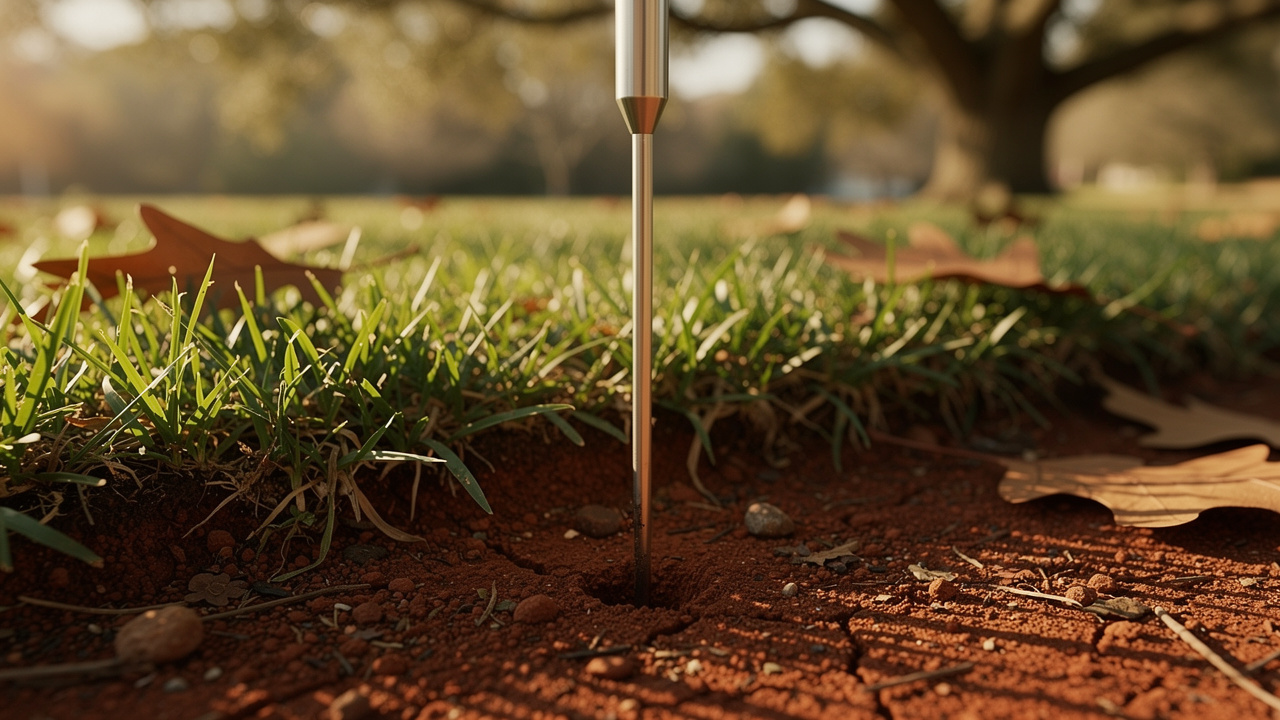
Weather patterns shift from year to year, so relying only on the calendar can leave treatments either early or late. Soil temperature, on the other hand, changes much more slowly and lines up closely with weed germination. Measuring that temperature a couple of inches down tells you far more than any date on a page.
Homeowners can check this themselves with a simple meat thermometer or soil probe pushed into the top layer of soil in sunny parts of the yard. Pay attention to these key points:
When readings hold in the low 50s°F in late winter, summer annual weeds are close to germinating and pre-emergent needs to be in place.
When those same readings fall back through the upper 60s°F toward 70°F late in the year, winter weeds are getting ready to sprout.
Champion Outdoor Services uses this same approach across North Atlanta properties so that pre-emergent goes down when it can do the most good, not just when a calendar reminder pops up.
The Consequences Of Poor Timing
Missing the timing on pre-emergent has real effects that show up all season:
Applied too early: Warm Georgia weather can cause the product to break down before the main wave of weed seeds wakes up, leaving the yard exposed during peak germination.
Applied too late: If pre-emergent is spread after crabgrass and other weeds have already sprouted, it has no impact on those plants at all.
Trying to use pre-emergent on visible weeds is like locking the barn door after the horse has already left. At that point, the only options are post-emergent products and removal by hand, both of which take far more time and effort. This is one of the biggest reasons many Alpharetta homeowners choose a professional service to manage timing for them.
Common Georgia Weeds That Pre-Emergent Applications Target
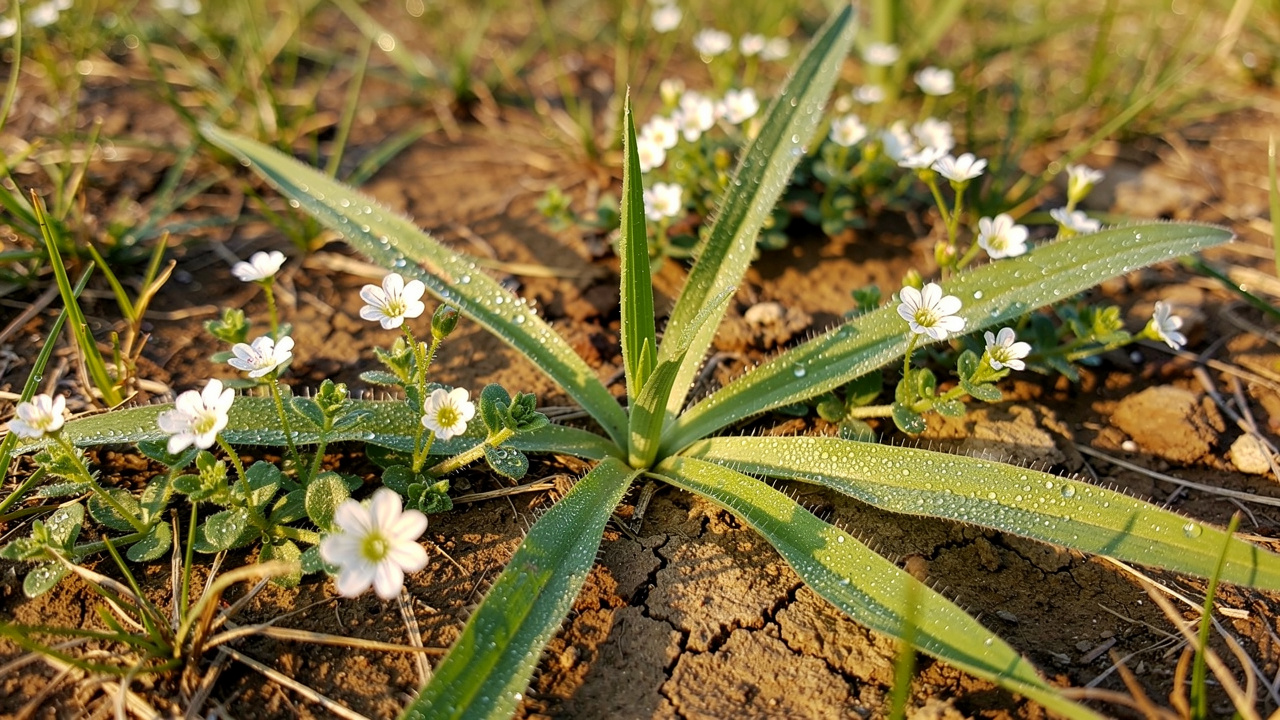
Georgia lawns see many of the same weed species year after year, and most fall into groups that a well-timed pre-emergent program can control. Knowing which weeds are common in North Atlanta makes it easier to understand why certain months matter so much, and why skipping either the spring or fall window can leave the yard open to trouble.
Champion Outdoor Services spends every season walking properties across Alpharetta, Milton, Roswell, Johns Creek, and nearby areas. That on-the-ground experience shows up in their pre-emergent plans, which focus on the weeds that cause the most problems in Georgia’s warm, humid climate.
Weed Type | Examples | Main Germination Period | Typical Target Application |
|---|---|---|---|
Summer Annuals | Crabgrass, Goosegrass, Ragweed | Late winter to mid-spring as soil warms to ~55°F | Spring pre-emergent |
Winter Annuals | Annual Bluegrass, Chickweed, Henbit | Late summer to fall as soil cools to ~70°F | Fall pre-emergent |
Perennials (From Seed) | Dandelion seed, Plantain seed | Various, often spring and fall | Controlled partly by both spring and fall treatments |
Summer Annual Weeds (Spring Application Targets)
Summer annual weeds germinate as the soil warms in spring, grow quickly in the heat, and then drop seeds before dying off at the first hard frost.
Some of the worst offenders in Georgia include:
Crabgrass – A coarse, spreading grass that thrives in sunny, thin sections of the yard and along driveways and sidewalks. Once crabgrass gets a foothold, it can form wide mats that stand out sharply against the finer texture of Bermuda or Zoysia turf.
Goosegrass – Often confused with crabgrass at first glance. Goosegrass frequently has a slightly whitish or silvery center where the stems join, and it tolerates compacted soils where traffic is heavy or mowing equipment frequently turns.
Ragweed – Known for causing allergy problems, ragweed is also a summer annual that starts life in spring and grows all season.
A correctly timed spring pre-emergent stops these weeds as they sprout, rather than forcing you to fight them all summer.
Winter Annual Weeds (Fall Application Targets)
Winter annual weeds follow almost the opposite schedule. They germinate in late summer or fall when soil temperatures drop, live through the winter as small plants, and then surge with growth and seed production in early spring.
Common winter annuals in North Atlanta include:
Annual Bluegrass (Poa annua) – Produces light green clumps and noticeable white seed heads that stand out against dormant warm-season turf.
Chickweed – Forms low, dense mats with small white, star-shaped flowers and can smother desirable turf where it becomes thick.
Henbit – Recognized by its square stems and purple flowers, henbit takes advantage of cooler months and open soil.
Fall pre-emergent treatments are designed specifically to block this wave of weeds, keeping lawns clearer during late winter and early spring.
A Note On Perennial Weeds Like Dandelions
Perennial weeds, such as dandelions, live for many years and can spread both by seeds and by their root systems. A pre-emergent treatment will not kill an established dandelion plant or any other perennial already rooted in the lawn. However, it does play an important role in controlling future generations.
When pre-emergent is applied in both spring and fall, it stops many of the new seeds produced by flowering perennials from germinating. Over time, that reduces the number of new plants that appear, especially when combined with post-emergent spot treatments and regular mowing. This is another reason why a year-round weed control program from Champion Outdoor Services is more effective than single, one-time treatments.
How Pre-Emergent Fits Into A Complete Lawn Care Strategy
While pre-emergent is a powerful tool, it is just one part of a healthy yard. The best weed control program combines chemical prevention, spot treatments, and strong turf management. When all three are present, weeds have fewer places to take hold, and the lawn recovers more quickly from stress caused by heat, traffic, or drought.
Champion Outdoor Services builds pre-emergent into broader Turf and Shrub Health Management programs that also focus on correct mowing, fertilizing, watering, and plant care. For many properties across Alpharetta and the North Atlanta area, this full approach leads not only to fewer weeds but also to thicker grass, healthier shrubs, and more enjoyable outdoor time for the family.
“Healthy turf is the best herbicide you can buy.”
— Common saying among lawn care professionals
Pre-Emergent + Post-Emergent – A Winning Combination
No matter how carefully a pre-emergent treatment is timed and applied, a few weeds will almost always find a way through. Birds drop seeds, wind carries them from nearby fields, and some species are simply tougher than others. That is where post-emergent products come in as a second layer of defense.
With a good program:
Pre-emergent keeps the majority of annual weeds from starting.
Post-emergent is used in targeted ways to spot-treat any plants that do appear.
This approach keeps overall chemical use lower than constant blanket spraying while still delivering a yard that looks clean and well cared for. Champion Outdoor Services plans pre-emergent and post-emergent steps together so they support each other instead of working in isolation.
The Role Of Healthy Turf As Your Best Defense
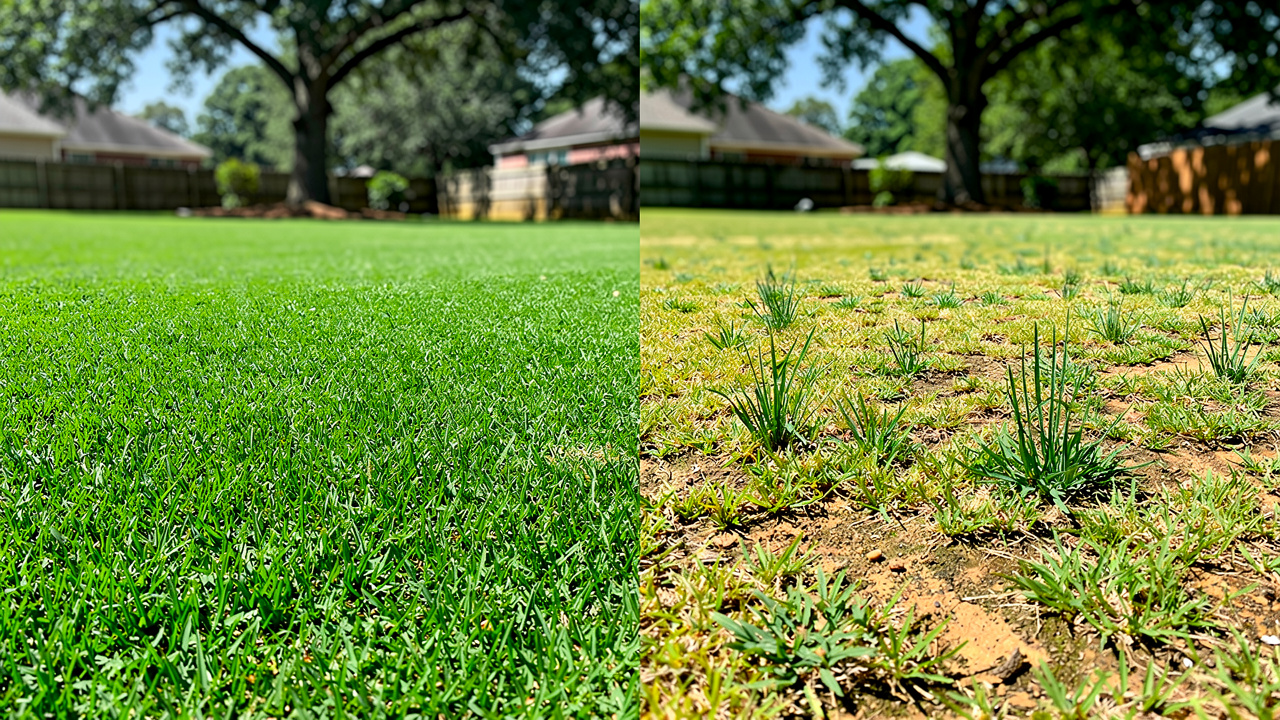
Even the best herbicide program cannot fully make up for thin, weak turf. Weeds are opportunists that rush into:
bare soil,
compacted ground, and
shaded, stressed areas where grass struggles.
A thick, vigorous lawn shades the soil, uses available nutrients efficiently, and leaves very few openings for weed seedlings to take root.
Three cultural practices make a huge difference here:
Mowing at the correct height for your grass type (Bermuda, Zoysia, or Fescue) encourages deeper roots and better density.
Following a proper fertilization schedule feeds the turf enough to grow thick without pushing it into soft, weak growth.
Deep but infrequent watering trains roots to grow downward, improving drought tolerance and weed competition.
Champion’s Turf and Shrub Health Management plans bring these elements together so pre-emergent has the best possible lawn to protect.
Don’t Forget Planting Beds
Pre-emergent is not just for turf areas. Weeds in planting beds can steal moisture from shrubs and ornamental plants and make even a nicely edged property look messy. In these spaces, a combination of mulch and pre-emergent works very well.
A two- to three-inch layer of mulch:
helps block sunlight from reaching weed seeds, and
keeps soil moisture more consistent around desired plants.
When paired with a pre-emergent product that is specifically labeled as safe for use around ornamentals, weed pressure in beds can drop sharply. Champion Outdoor Services typically applies pre-emergent in these areas after new transplants are in place, never before seeding or direct planting, so desirable plants continue to thrive.
Why Professional Pre-Emergent Application Delivers Superior Results
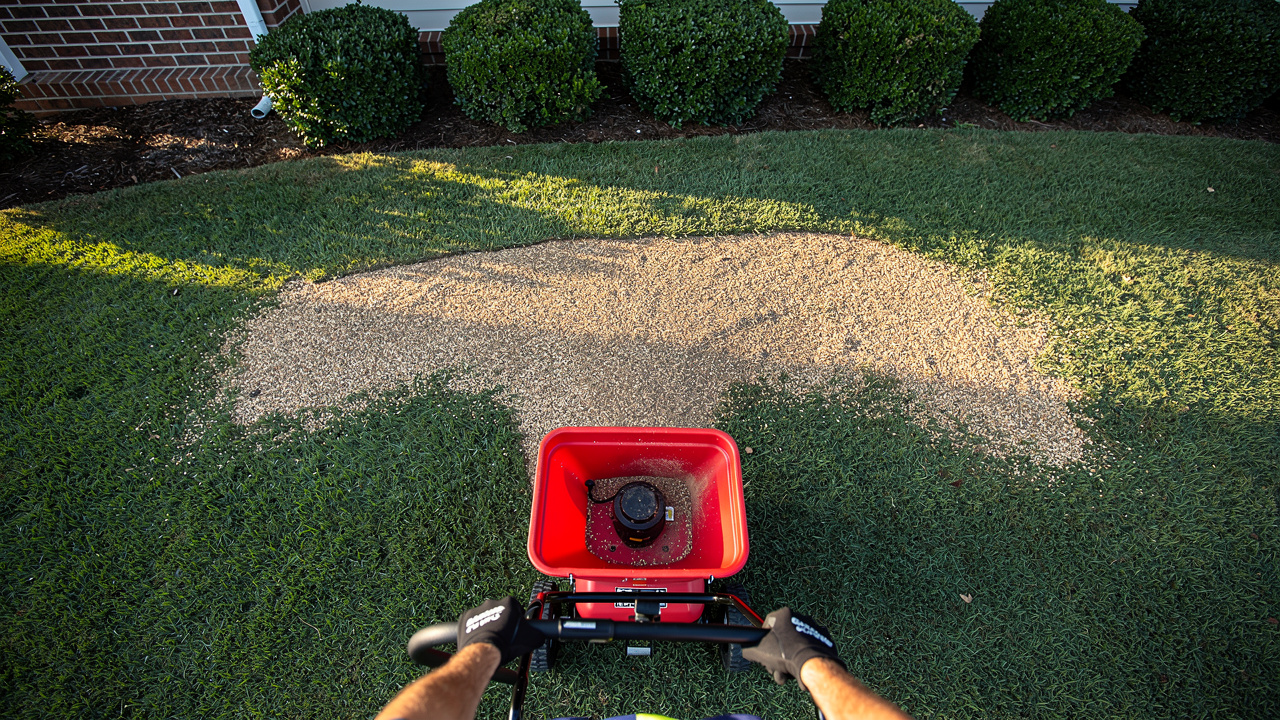
Many homeowners in Alpharetta and across North Atlanta have tried pre-emergent on their own and seen mixed results. Common problems include guessing at the right week, choosing a product that does not match their grass type, missing strips of the yard, or forgetting to water the material into the soil. Any one of these missteps can lead to thin protection and patchy weed outbreaks.
Professional pre-emergent application from Champion Outdoor Services addresses all of these weak points. With more than three decades of local experience, the team understands Georgia weather patterns, soil types, and weed pressures in detail. They also know which products work safely with Bermuda, Zoysia, Fescue, Centipede, and St. Augustine turf, and which ones should never be used on certain grass types.
What Professionals Bring | Why It Matters For Your Lawn |
|---|---|
Over 30 years of North Atlanta experience | Local knowledge helps time pre-emergent applications to actual soil temperatures instead of guessing by the calendar. |
Correct product selection by grass type | Matching the herbicide to the turf helps prevent yellowing, thinning, or even death of sensitive grasses like Centipede or St. Augustine. |
Commercial-grade, calibrated equipment | Even coverage across wide areas means there are no untreated “stripes” where weeds can thrive and no heavy spots that stress the turf. |
Careful attention from hands-on ownership | Properties are walked, observed, and treated as if they were the technician’s own yard, which leads to cleaner results and better follow-up. |
Ongoing monitoring and follow-up visits | Breakthrough weeds are spotted early, and post-emergent or other adjustments are made before minor issues turn into big problems. |
Professionals also manage safe handling of all lawn chemicals, including pre-emergent herbicides, fertilizers, and related treatments. Champion Outdoor Services communicates clearly about when children and pets can return to the yard and how watering should be handled after each visit. Many clients also combine weed control with mosquito control services so the family can enjoy the yard with fewer biting insects during summer evenings.
For property owners who want strong curb appeal without spending weekends experimenting with products, professional pre-emergent application is an investment that pays off every season.
Common Pre-Emergent Mistakes Homeowners Make (And How To Avoid Them)
Pre-emergent herbicides are very effective when used correctly, but a few common mistakes can make them seem weak or “hit and miss.” Understanding these pitfalls helps homeowners ask better questions and also shows the value of having an experienced team such as Champion Outdoor Services manage the process.
Whether someone is trying to treat a small front yard in Alpharetta or a multi-acre property in another part of North Atlanta, the same basic errors tend to pop up. The following five issues are responsible for most of the disappointing results people report after trying pre-emergent on their own.
Applying too late is probably the single most common mistake in Georgia. Many homeowners wait until they see the first crabgrass or other weeds before acting, but by then pre-emergent has no effect on those plants. Once a weed is visible, the product simply cannot reach the seed as it germinates, because that stage has already passed. At that point, only post-emergent herbicides or pulling by hand can remove the weeds, which takes more time and effort.
Skipping the watering-in step leaves most granular pre-emergent sitting on blades of grass where it cannot do its job. These products are designed to be washed into the top layer of soil with about half an inch of water from irrigation or rain. Without that water, the protective barrier never forms, so weed seeds germinate freely, and the homeowner believes the product failed. Professional services plan applications around watering schedules and weather so activation happens every time.
Using the wrong product for the grass type often leads to yellowing patches, slow growth, or even dead turf in sensitive areas. Some herbicides that work very well on Bermuda or Zoysia can be harsh on Centipede or St. Augustine. Reading labels carefully takes time, and it is easy to overlook small print about turf safety. Champion Outdoor Services removes this risk by selecting products that match each yard’s exact grass mix.
Disturbing the soil barrier after application is another problem that can go unnoticed. Activities such as core aeration, dethatching, or aggressive raking after pre-emergent goes down can break up the treated layer. When that happens, weeds find bare spots where the barrier is thin or missing and sprout in small clusters. The best practice is to complete any major mechanical lawn work first and then apply pre-emergent once the soil will be left undisturbed.
Applying pre-emergent before overseeding blocks desirable grass seed just as effectively as weed seed. Homeowners who seed Fescue in the fall or overseed warm-season lawns with cool-season grasses often wonder why the seed did not come up, only to discover later that a pre-emergent had been applied too close to seeding time. In general, new grass should go through three to four mowings before a pre-emergent is applied, and pre-emergent should not be used right before seeding unless a special product is labeled for that purpose.
The encouraging news is that every one of these problems can be avoided with planning and expert guidance. Champion Outdoor Services builds pre-emergent scheduling, seeding plans, and cultural practices into a single, clear program so property owners can stop guessing and enjoy a cleaner, healthier yard.
“An ounce of prevention is worth a pound of cure.”
— Benjamin Franklin
Conclusion

For Georgia homeowners, pre-emergent applications are one of the most important steps that can be taken right now to keep a lawn free from problem weeds all season long. By forming a barrier in the soil before seeds sprout, these treatments stop crabgrass, goosegrass, chickweed, annual bluegrass, and many other weeds from ever becoming a headache. The key is getting the right product on the lawn at the right time and activating it with proper watering.
The timing windows in Alpharetta and the wider North Atlanta area are fairly narrow. Waiting just a few weeks too long in late winter or early fall can mean the difference between a mostly clean yard and months spent chasing weeds that have already gained a foothold. That is why so many property owners trust Champion Outdoor Services to manage this part of their lawn care for them.
With more than 30 years of local experience, careful attention to detail, and a commitment to treating every property as if it were their own, Champion Outdoor Services offers far more than a single application. Their Turf and Shrub Health Management programs, combined with services such as mosquito control and ongoing plant care, give homeowners a clear plan for year-round outdoor beauty.
If you are ready to get ahead of weed season this year, contact Champion Outdoor Services for a lawn assessment, and let their team design a pre-emergent plan that fits your property and your goals.
FAQs
How Soon After Applying Pre-Emergent Can My Children And Pets Go Back On The Lawn?
Most products recommend keeping children and pets off the treated yard until it has been watered in and the grass has dried completely. In many cases, this means waiting somewhere between 24 and 72 hours, depending on weather and watering schedules. Each pre-emergent herbicide has its own safety guidelines printed on the label, and those directions should always be followed closely. Champion Outdoor Services explains these timelines after every visit so families know exactly when the yard is ready for play again.
Will Pre-Emergent Prevent Me From Overseeding My Lawn This Fall?
Yes, pre-emergent herbicides can block new grass seed from germinating just as they do weed seed, which is why timing matters so much when overseeding. If you plan to overseed a Fescue lawn in the fall, for example, that seeding should be done well before any pre-emergent is applied, or several months after the last application has broken down. New grass should be allowed to grow thick and go through three or four mowings before a pre-emergent is used. Champion Outdoor Services schedules overseeding and weed control together so they support each other instead of causing conflicts.
Is One Pre-Emergent Application Per Year Enough For Georgia Lawns?
For most Georgia lawns, one pre-emergent application per year is not enough to provide full coverage. Because these products usually stay active in the soil for about three months, they cannot protect against both summer and winter waves of weeds with a single treatment. At minimum, one early spring treatment and one early fall treatment are needed to cover the main germination periods. Champion Outdoor Services builds these two key applications into a seasonal lawn chemical program so properties receive steady protection through the year.
Can Pre-Emergent Herbicides Harm My Existing Shrubs And Plants?
Pre-emergent products are designed to affect germinating seeds, not established plants with mature roots, so most shrubs and ornamental plants are safe when the right product is used correctly. The important points are:
choose herbicides that are labeled for use around ornamental beds, and
avoid direct spraying on sensitive foliage.
In addition, care must be taken when working around shallow-rooted plants and young transplants. Champion Outdoor Services relies on Turf and Shrub Health Management knowledge to select appropriate products and apply them safely around existing plantings.
Does Champion Outdoor Services Offer Pre-Emergent Applications In Alpharetta And Surrounding North Atlanta Areas?
Yes. Champion Outdoor Services proudly provides pre-emergent treatments and full lawn care programs throughout Alpharetta, Georgia and many nearby North Atlanta communities. Their services include residential lawn maintenance, Turf and Shrub Health Management, mosquito control, and careful use of lawn chemicals for long-term turf health. Homeowners and property managers can contact the team to schedule a visit and receive a customized plan that keeps weeds in check and outdoor spaces looking their best.